
Setting Revenue Goals That Drive Real Lottery Growth

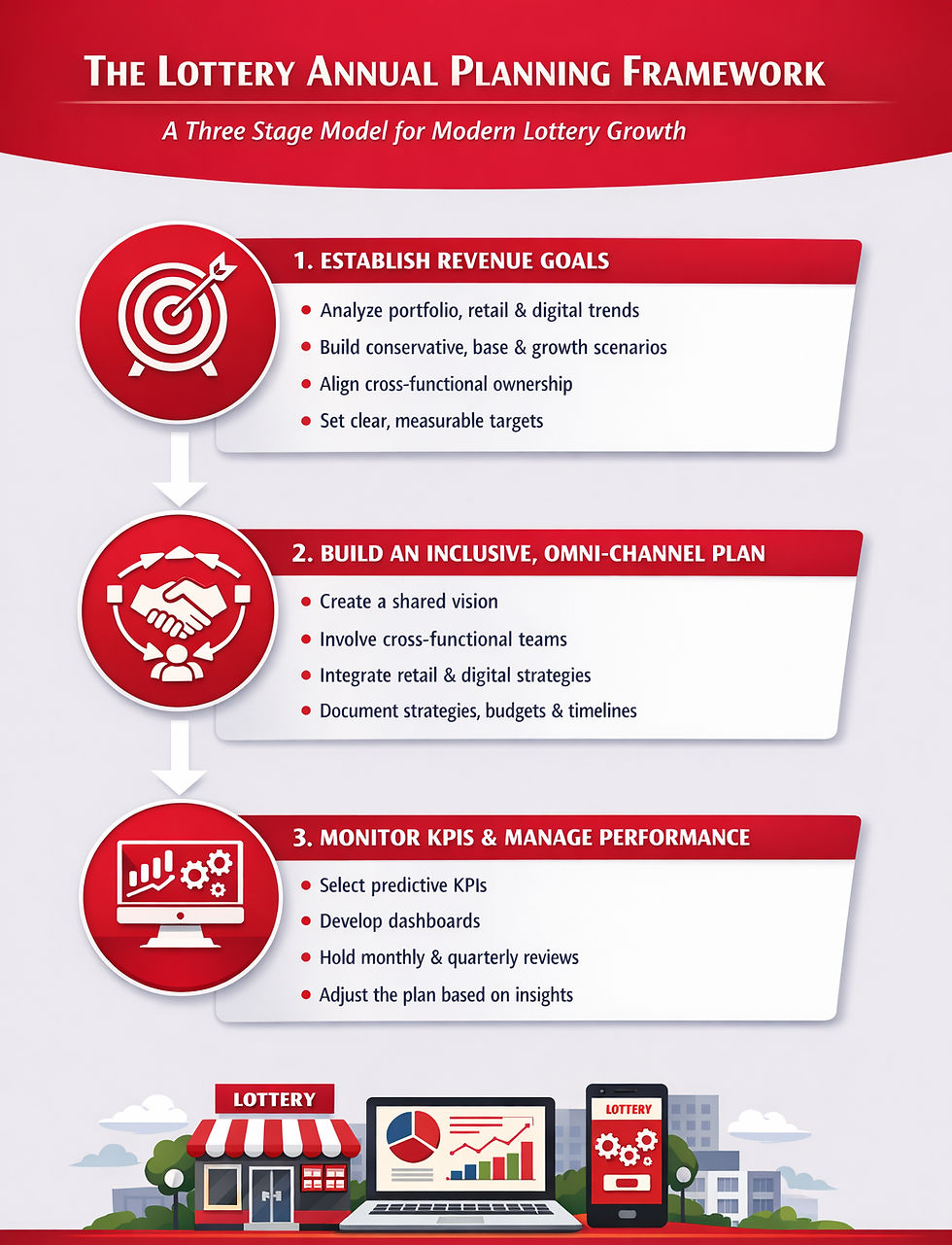
Part 1 of the Annual Planning Series:
Most lotteries begin their annual planning process by asking a familiar question: “What should our revenue target be for next year?” Too often, the answer is driven by politics, tradition, or a simple “last year plus X percent” formula. In More Than Luck: Defeating the Five Saboteurs of Lottery Growth, the idea of intentional planning is central, and revenue goals are the first place where intention must replace habit.
In today’s environment, with shifting player behavior, retail disruption, online competition, and demographic decline, revenue goals must be grounded in real drivers of performance. A strong revenue target does more than set expectations. It aligns every department around a shared outcome, guides investment decisions, shapes product strategy, and establishes the foundation for KPI monitoring.
How to Set Strong, Strategic Revenue Goals
1. Start with the drivers, not the number
Instead of “last year plus three percent,” build your goal from the ground up. Consider portfolio performance, jackpot cycles, retail trends, digital acquisition and retention, marketing investment levels, player behavior, and economic conditions. This creates a goal rooted in reality rather than hope.
2. Use scenario planning
Build three models: a conservative case, a base case, and a growth case. This gives leadership and legislators a realistic range and prepares the organization for volatility.
3. Make revenue goals cross-functional
Revenue is not a marketing number or a product number. It is a business number. Finance, product, marketing, sales, digital, and operations should all share ownership.
The Bottom Line
A strong revenue goal is the first step in a strong annual plan. It sets the tone, the pace, and the expectations for the year ahead. Growth begins with clarity.


Comments